The Portuguese company, founded in 1986, is modernizing its manufacturing facility in the Santarém district to quadruple production to 75 million square meters of self-adhesive materials. Installation of the new equipment will begin in August.
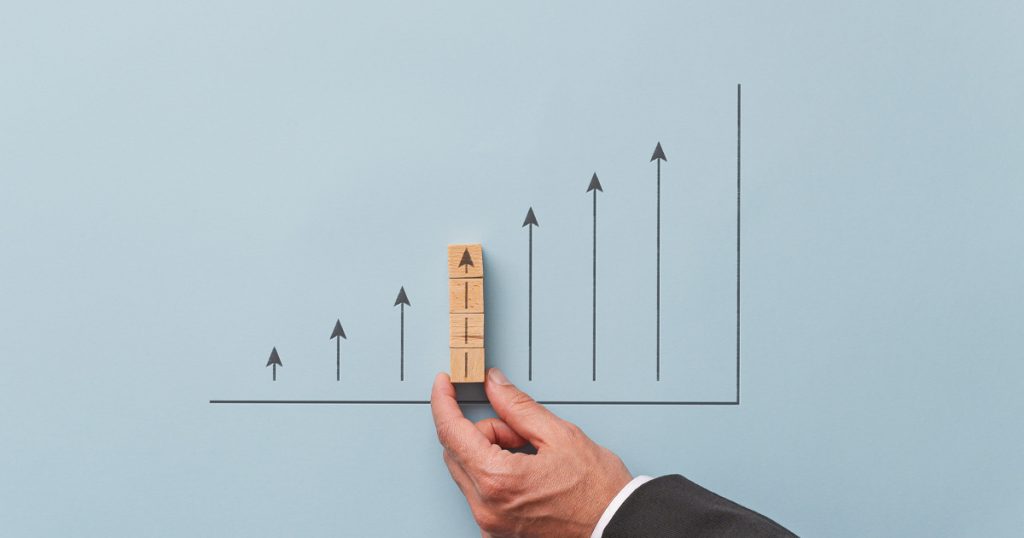
Portuguese company Digidelta, which specializes in the manufacture of printing systems and materials, is investing €3.5 million in modernizing its factory in Torres Novas. The robotization process aims to significantly increase production capacity and the efficiency of industrial operations, quadrupling the current 15 million m² of adhesives produced to around 75 million m². The financing for this factory renovation will be completed by the end of this year and will begin to take effect in 2025. The new equipment will be installed as early as next August, the founder and CEO told Jornal Económico (JE). "The investment comes from a growth strategy that we had to suspend with Covid-19. This year, we have finally managed to recover and even exceed 2019 figures, mainly in the area of exports of the self-adhesive materials we manufacture in Torres Novas. We sell in 60 countries and there is increasing demand," explained Rui Leitão.
Rui Leitão says that even before the pandemic, the company realized that it would need to increase its production capacity. "We were already reaching the limit of what we could satisfy in terms of orders. It is a new production unit with automation, mainly in the packaging area. The company will have a much more efficient response capacity, enabling it to provide faster services and better quality control," he tells JE.
In practice, what will change in that 10,000 m² space located in the Santarém district? It involves a new line of adhesive coatings, automated packaging, and an automated warehouse for semi-finished products. In other words, Digidelta has acquired a fourth, more advanced self-adhesive production machine and digitized the packaging stage. For this operational transformation, it has signed contracts with an American company that has a metalworking factory in Bilbao and a Portuguese software and hardware technology company, whose names and associated values have not been disclosed.
"Once the stickers have been produced, they have to be placed on rolls, packed in boxes, and placed on pallets. It's manual work that will now be automated and, consequently, more efficient," summarizes the entrepreneur who created this company almost 40 years ago after leaving the accounting firm where he worked.
In 2023, Digidelta recorded its best ever turnover (€41 million), €3 million more than the previous year. With the new machinery, the ambition is to exceed €43-44 million in 2024 and reach €75 million in the next five years.
How? Which industries does it sell to? Visual communication, sign graphics, marketing and advertising, textiles, labels and packaging, leather and footwear, interior decoration, and three-dimensional (3D) printing. Currently, the most widely sold products are Decal stickers, Digidelta's own brand launched in 2009, which constitutes one of its two business areas.
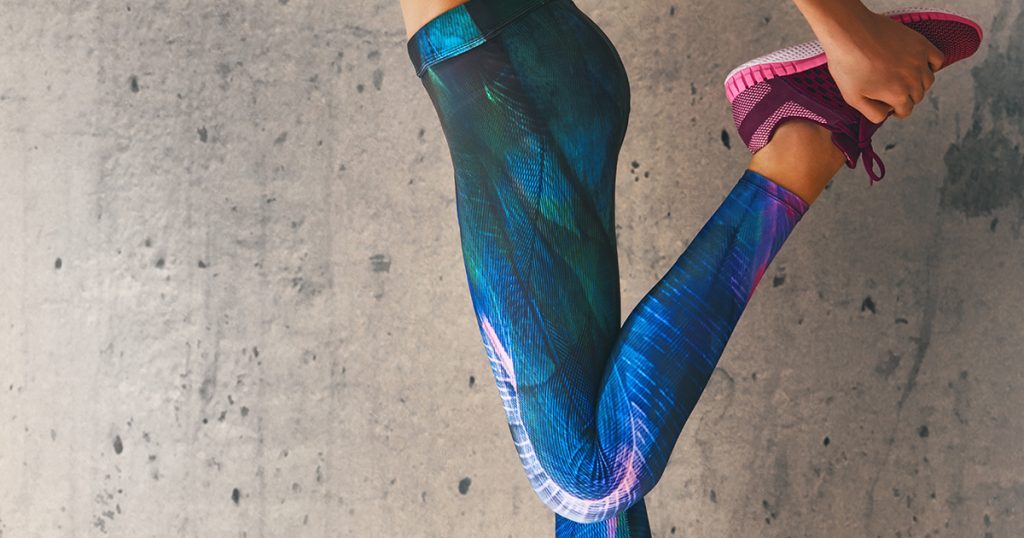
There is another driver behind these financial results: the partnership with Japanese company Mimaki, a manufacturer of inkjet printers, 3D printers, and cutting machines for the graphics and textile market, for which it is the exclusive representative for the Iberian Peninsula. "The stagnation in the fashion sector was offset by continued demand in the sportswear segments, with a full recovery and a significant increase in demand expected in 2024," predicts Rui Leitão.
Internationally, Digidelta has a physical presence in Spain, with commercial and technical units in the cities of Madrid and Barcelona, and in the other countries to which it exports, it has distributors who resell the products locally.
"Almost every day we are approached by companies looking to grow and others looking to invest (investment funds or companies in our sector). I don't think the time is right yet. We are in a very favorable phase of growth, and we want to take advantage of it and consolidate it. No one knows what tomorrow will bring, so we can't close any doors and we have to be prepared," he says.
As for succession, he admits that "it's an interesting question, because it's actually one of the issues on the table." It will be "more internal," by the management team that has been with him for several years, some executives for more than 20, and who "naturally, will take on this journey." "In my family or direct descendants, they are not interested in this. They each have their own professions and projects," confesses the businessman.