What is textile sublimation?
Simply put, textile sublimation is the process of printing an image or pattern that will be transferred to a fabric. However, to achieve a good end result, certain details must be taken into account.
Before you begin, you need to make sure that the fabric is 100% polyester (the higher the polyester content, the better the ink will adhere to the fabric, increasing its durability). You will also need special transfer sheets and a heat press machine.
And how do you do that?
The process begins by printing the image or pattern with sublimation (translucent) inks on a special transfer sheet, which is then pressed onto fabric using a special machine.
The transfer sheet is used to prevent ink absorption by the paper, facilitating the transition of the ink from a solid to a gaseous state through the machine, which is used at high temperature (200°C) and high pressure.
O que vai acontecer é que os poros do tecido vão abrindo com o calor e permitindo à tinta infiltrar-se nas fibras de poliéster de forma duradoura. A peculiaridade deste tipo de tintas permite utilizar uma variada paleta de cores devido à ligação da tinta com as fibras transparentes do tecido.
What lies beyond textile sublimation?
Existem vários tipos de impressão para além da sublimação têxtil. Começamos por explicar o que é a impressão direta. É um dos métodos mais utilizados, que possibilita a impressão de trabalhos em grandes quantidades de tamanhos mais pequenos, imprime diretamente em t-shirts ou noutro artigo têxtil e é o método indicado para trabalhos com ilustrações e imagens que requerem produção fotográfica.
Next, we present screen printing, which is the most expensive method and has some restrictions. Gradients, shadows, or the use of many colors are not allowed in the prints. It guarantees quality and durability and is the most suitable method when large quantities of work with few colors are required.
Finally, flex printing is used for more urgent jobs involving small quantities. It is printed on a cutting machine so that, after printing, it can be cut out immediately and is ready to use. It has a shorter lifespan compared to other methods, but maintains its quality over time.
The advantages and disadvantages
As with all printing methods, there are always advantages and disadvantages to consider. The advantages of sublimation printing include low production costs, product durability, guaranteed bright and intense colors, large-scale production (allowing for large quantities to be produced), and the breathability of polyester, which prevents perspiration.
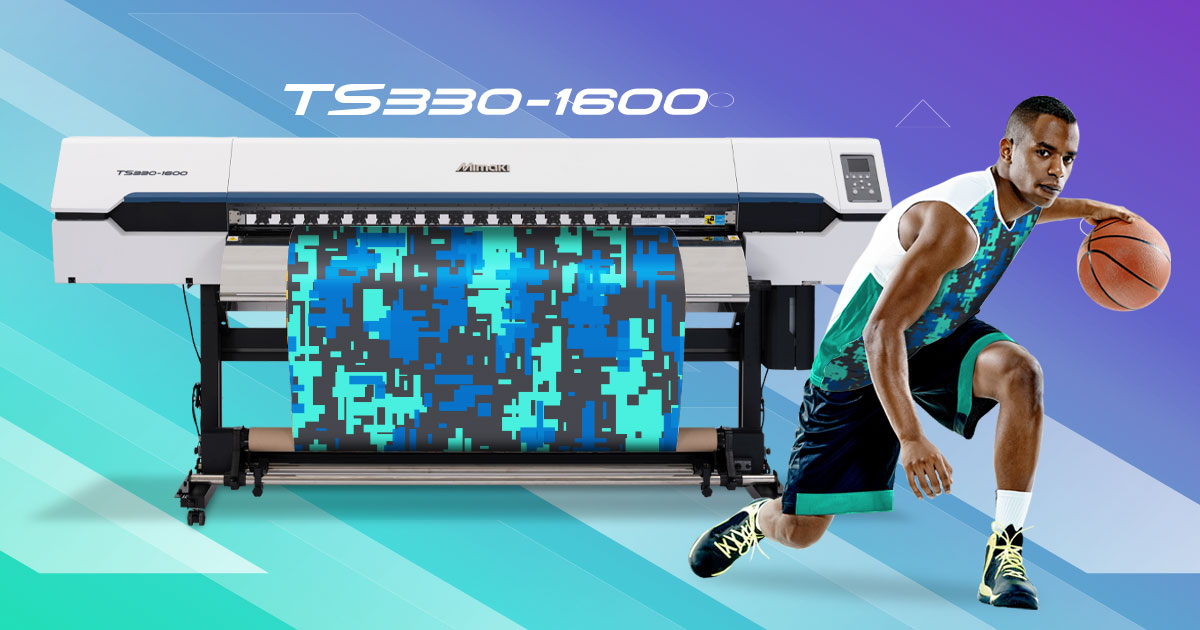
Em relação às desvantagens, a sublimação têxtil apresenta melhor eficácia em superfícies brancas, em tecidos finos e é limitada apenas a tecidos sintéticos.Mimaki – TS330-1600 – Impressora têxtil de sublimação
For what type of work is textile sublimation most suitable?
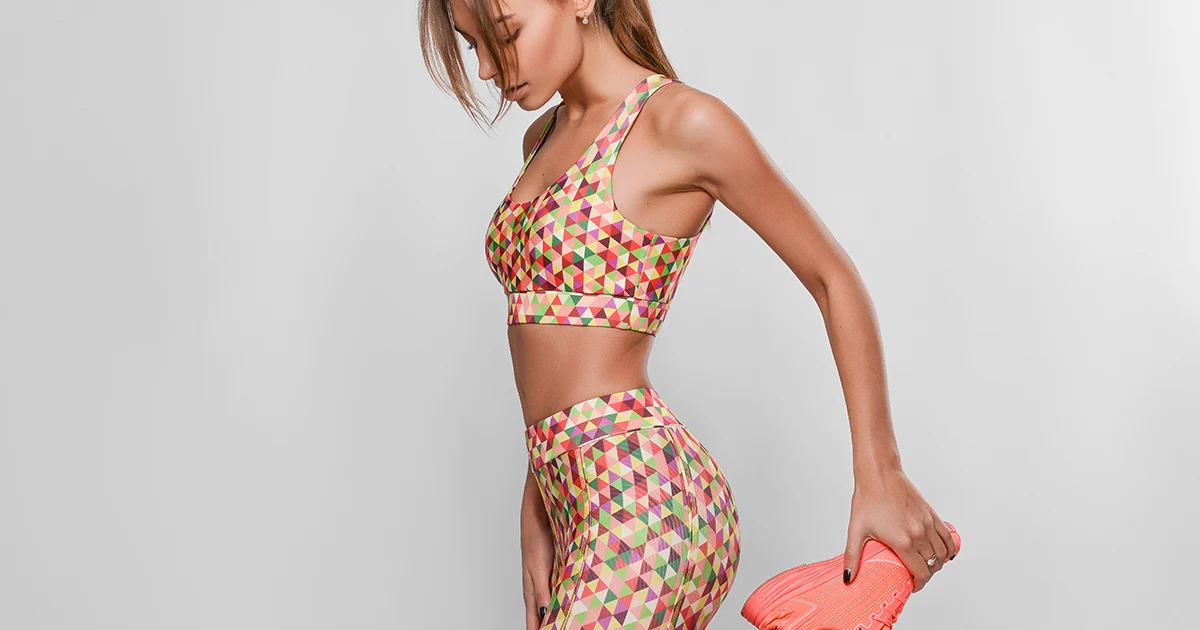
Se pretende utilizar vestuário desportivo, este é o método mais aconselhado devido aos poros do poliéster pois ajuda o atleta a controlar a sua transpiração. É utilizado ainda para projetos promocionais (vários tipos de bandeiras), individuais (decoração exteriores ou interiores: lençóis, almofadas…) e institucionais (cachecóis de clubes).
What types of machines can I use?
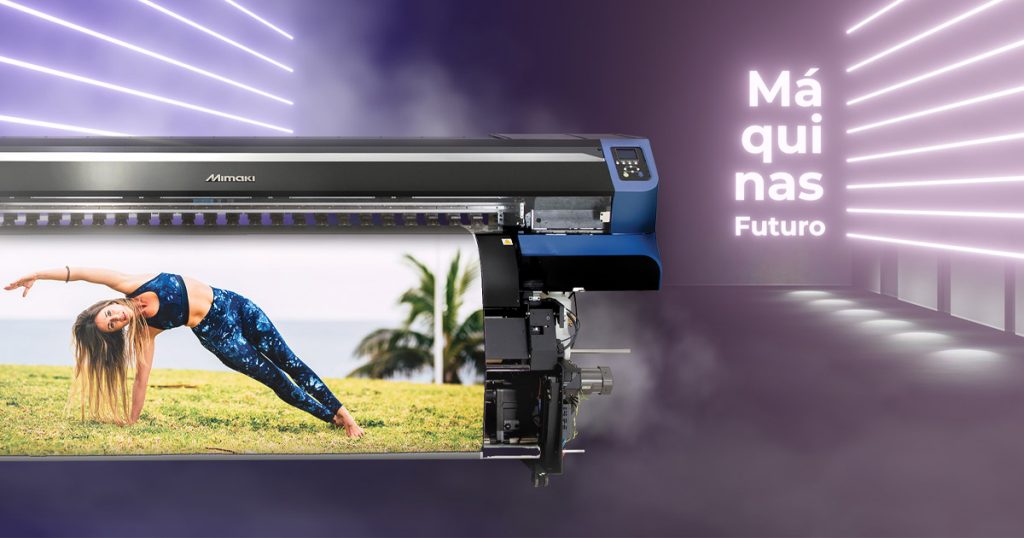
We have a wide range of sublimation and direct-to-garment machines suitable for any type of textile work you require. If you would like more information, please contact us.