What are UV inks?
A UV ink contains pigments, as well as monomers and a photoinitiator that polymerizes when exposed to UV light. The ink dries instantly after exposure to this light, which is usually an LED. Only a minimal amount of heat is generated, so it will not cause the vinyl to shrink.
There are no odors, and since the ink stays on the surface, a consistent finish can be achieved. UV
inks are often used in roll-to-roll machines and to create window graphics.
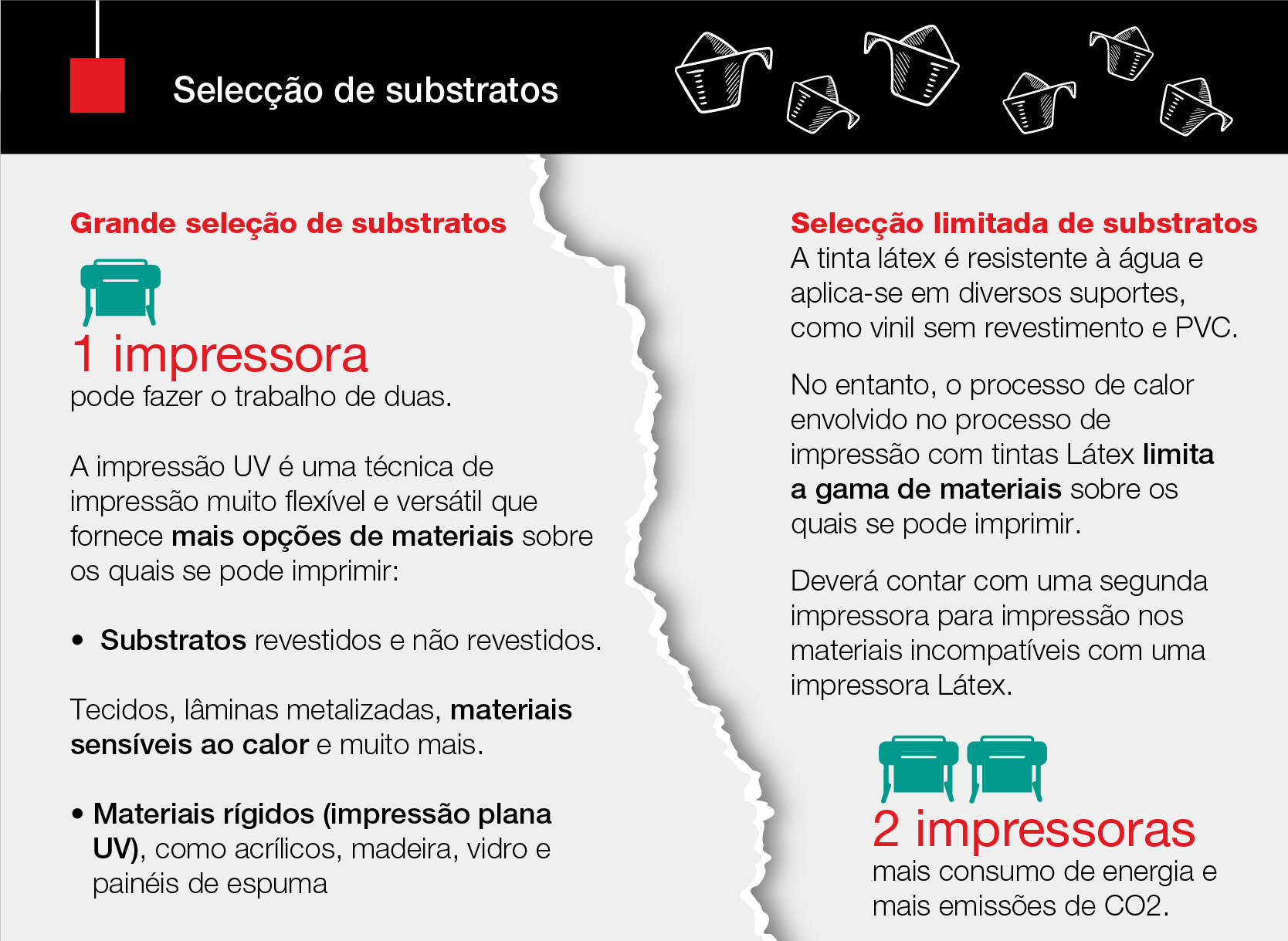
They can be used on plastic, wood, metal, concrete, and almost any other flat surface. Suitable for high-volume printing, UV inks provide an affordable solution, whether used on single sheets, flexible roll materials, or rigid printing materials.
What are latex paints?
Water-based latex inks cure instantly and use technology similar to the original formula developed by Hewlett Packard. Like UV inks, they produce no odor, as there are no gas emissions.
The curing process is heat-driven. Heat evaporates the water, causing the latex particles to fuse with the printed material; the ink dries quickly and adheres very well to the substrate.
A rapidly developing technology, latex ink is used to print on vinyl, paper, and various types of banners and signage, especially for packaging, retail, and exhibitions.
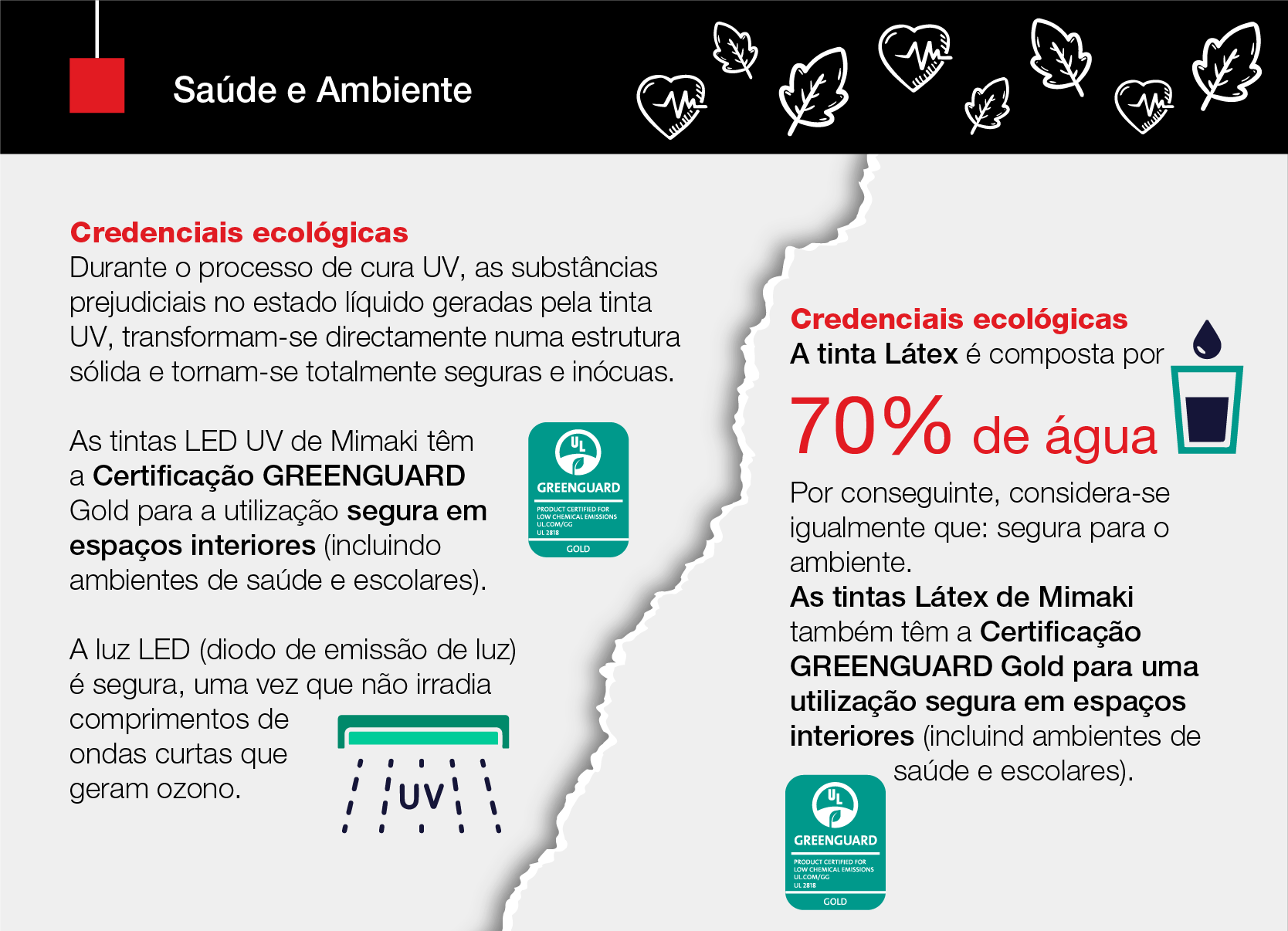
Latex paints can contain up to 60% water and are often considered environmentally friendly.
Which one is the most environmentally friendly?
The market is divided on this issue. In fact, latex ink is more environmentally friendly. However, it is necessary to consider the entire printing process in order to answer this question correctly.
Watch the video that Mimaki USA has prepared for you!
Which printing technology best suits your sustainability goals?
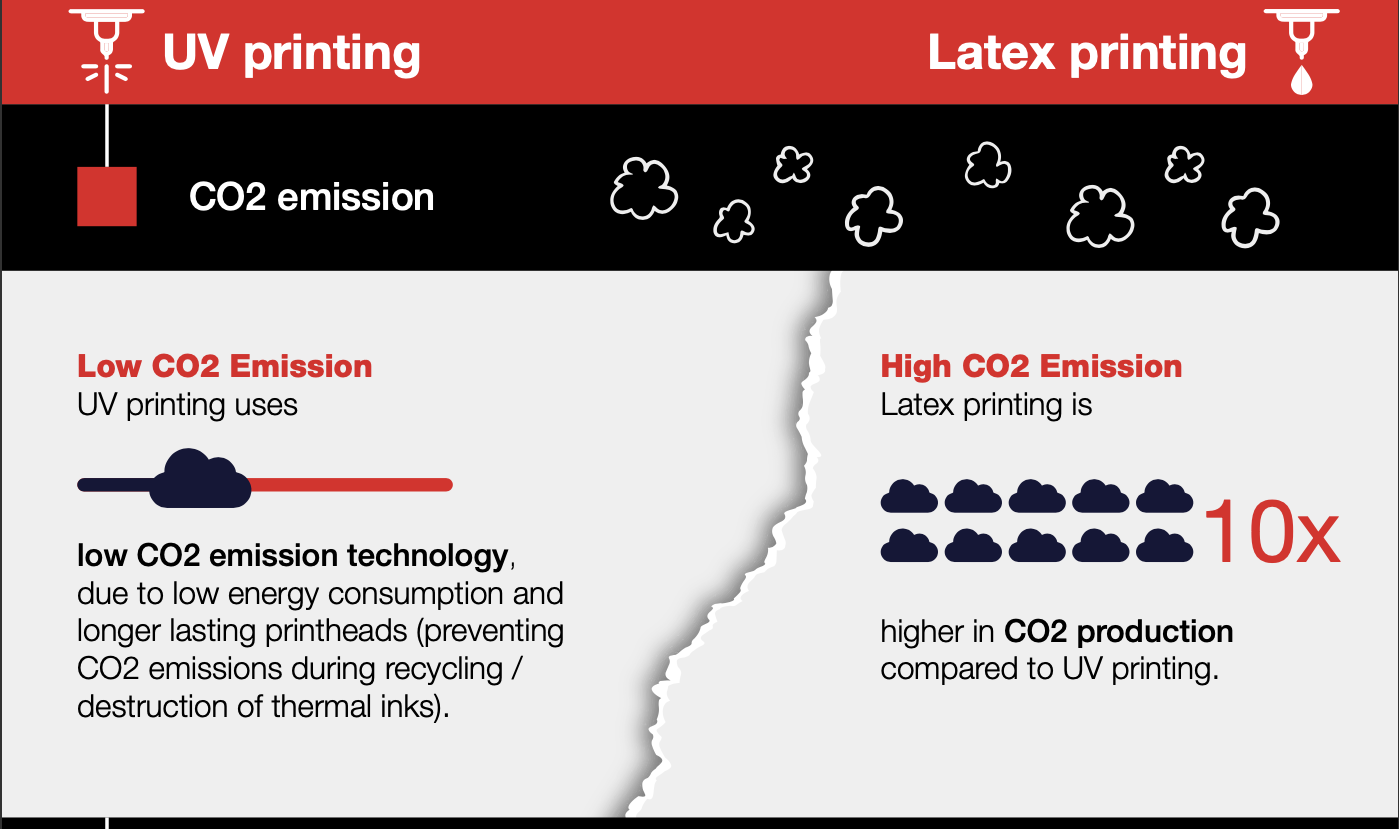
Sustainability is becoming an increasingly decisive factor in the choice of printing technology. European targets for reducing CO2 emissions in the fight against climate change will affect the printing industry in the long term. In addition, customer demand for sustainable solutions is increasing.
Innovation and new technologies have made it possible to develop printers that are more environmentally friendly than in the past. However, printing technologies differ in terms of their sustainability levels.
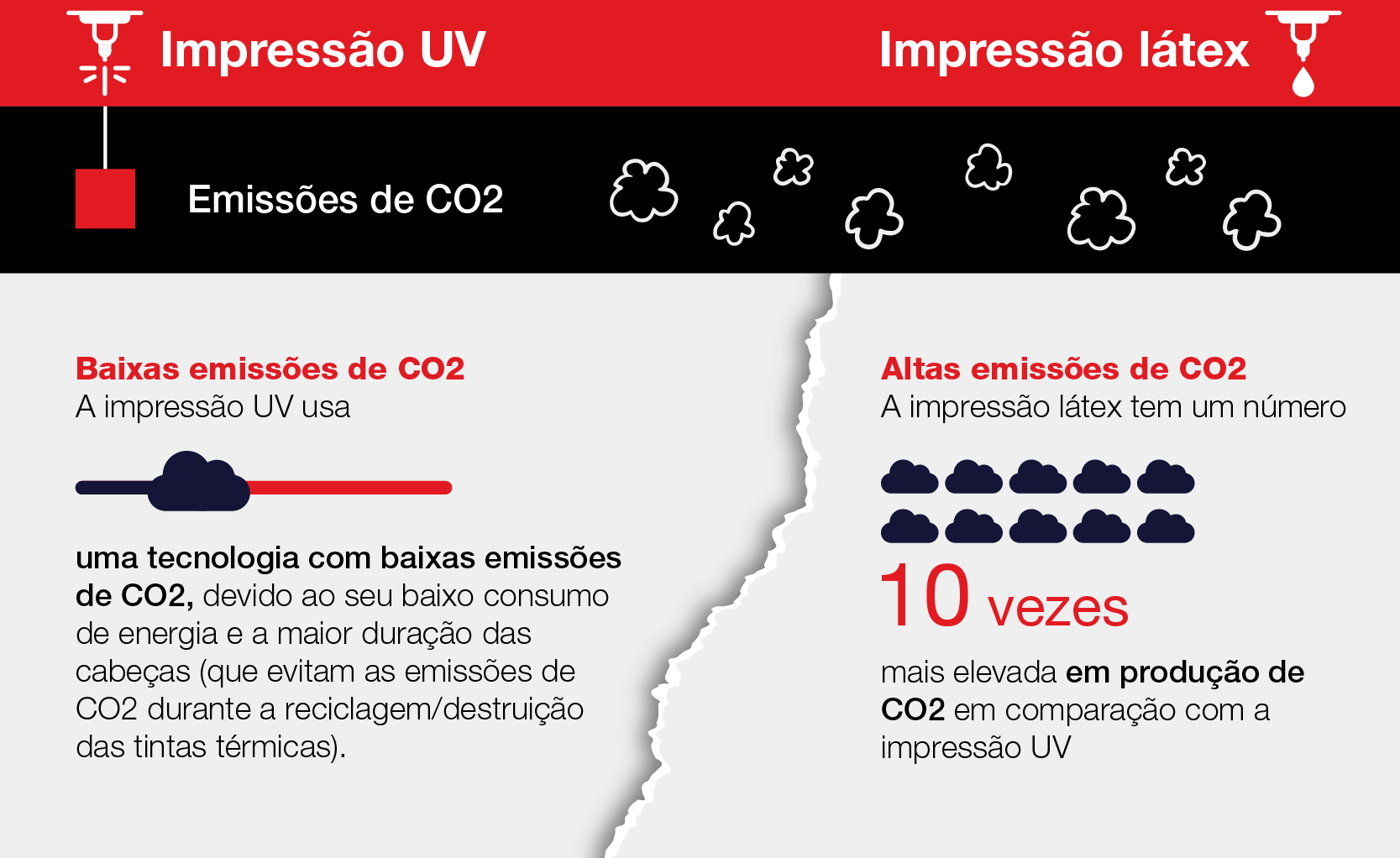
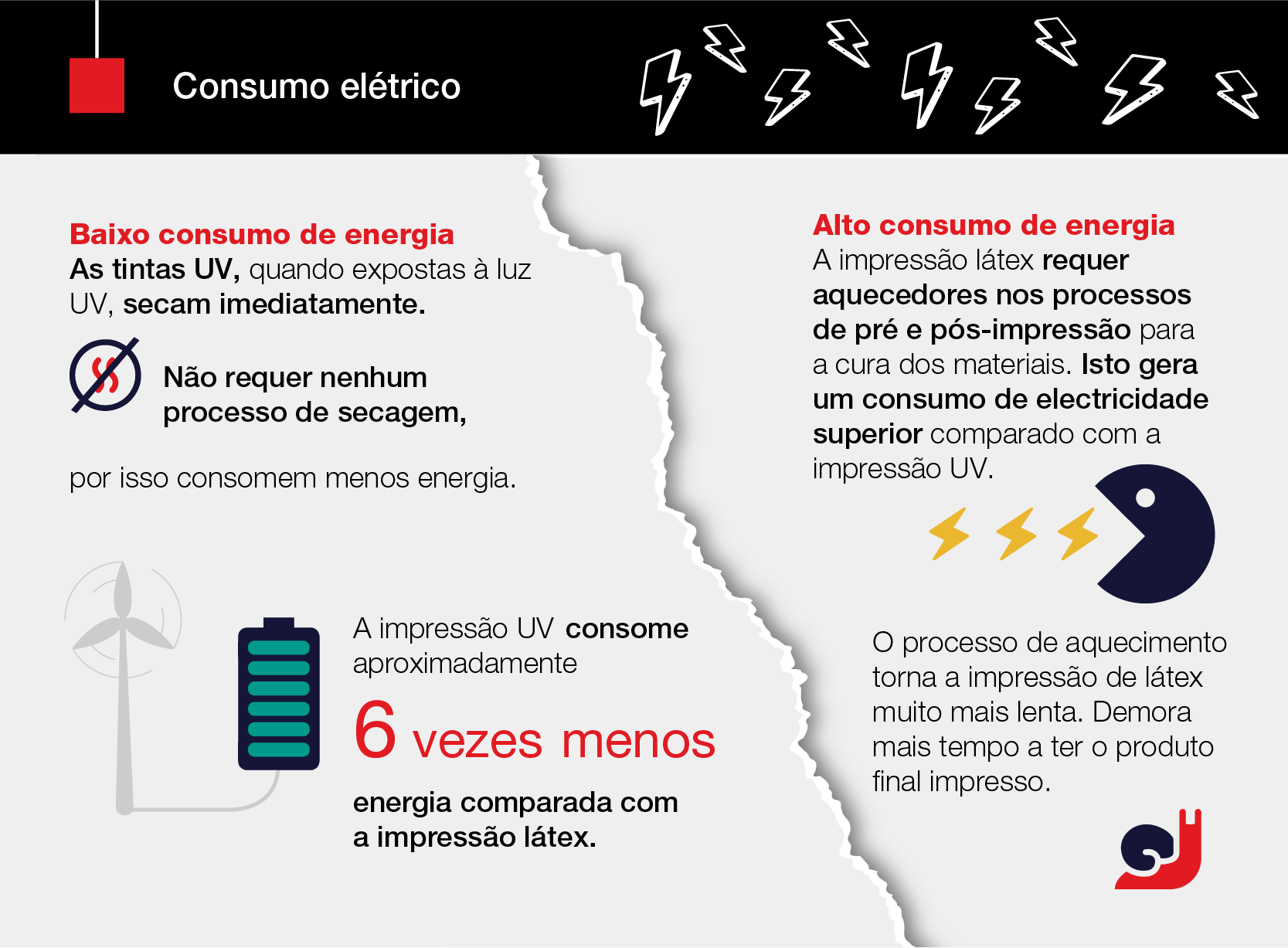
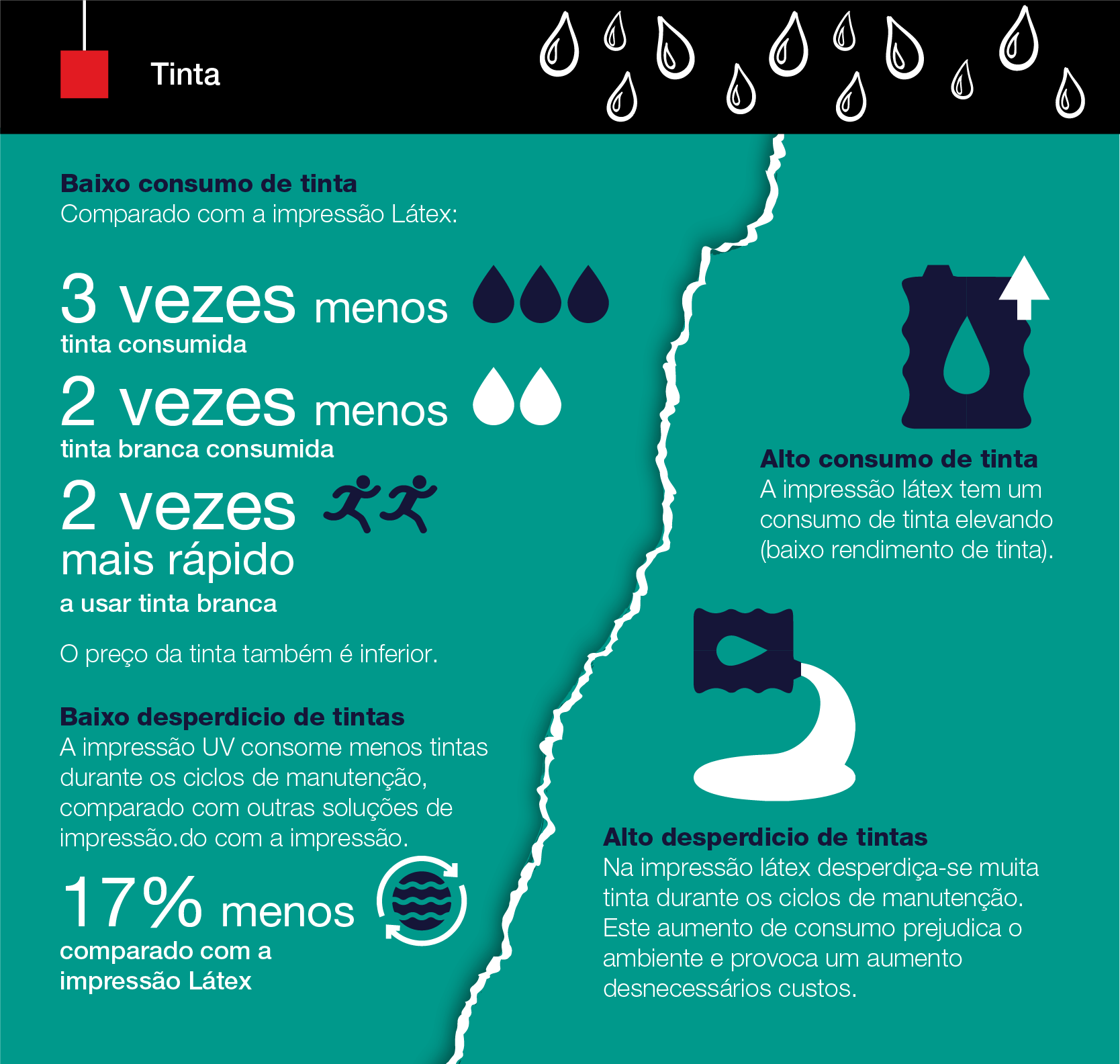
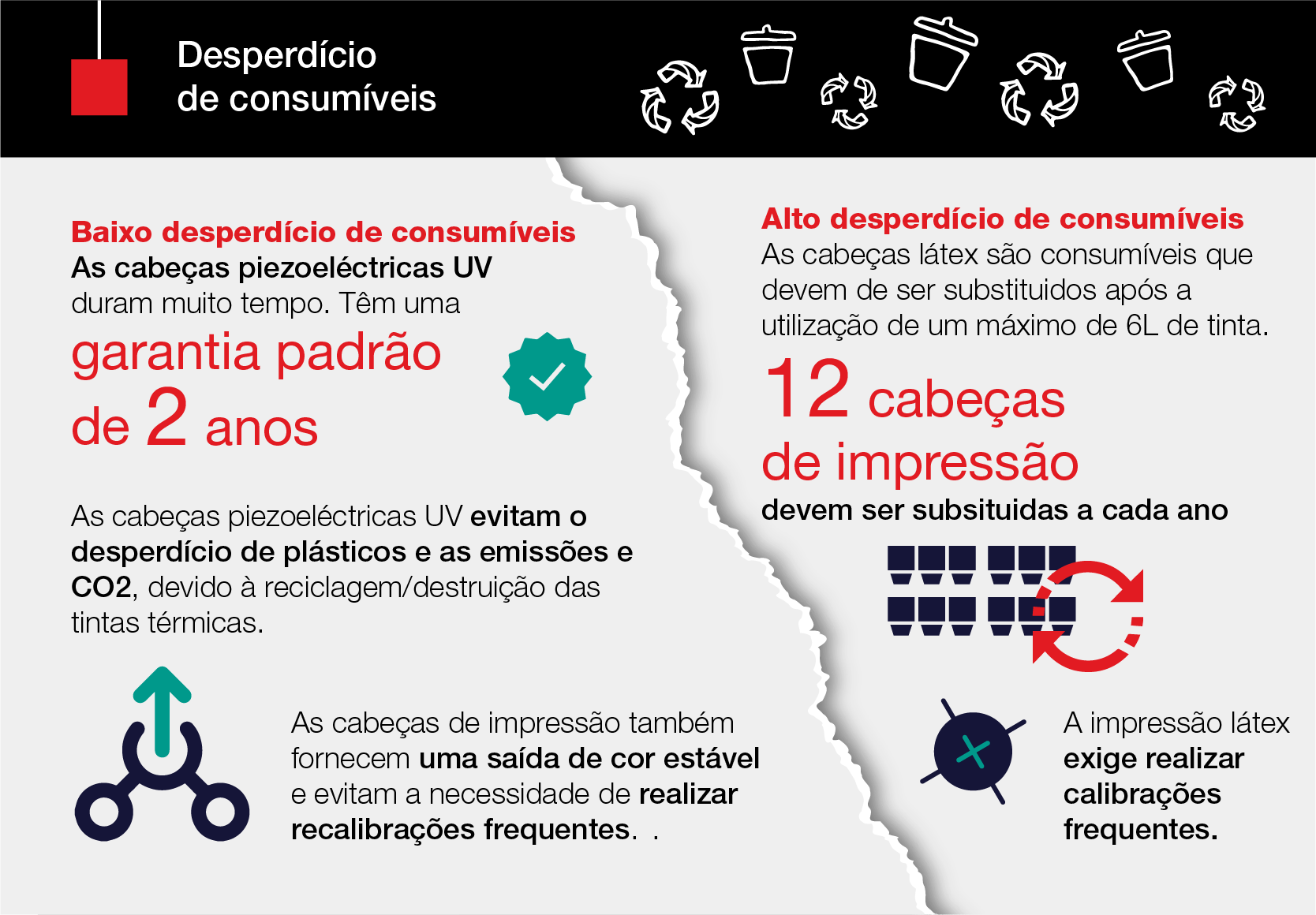
We compared and tested UV printing and latex printing in various segments. *Which printing technology is the most sustainable option and meets your sustainability goals?
*Os valores deste infográfico são baseados em testes internos realizados em Mimaki Engineering (Japão) Confirgurar Mimaki UCJV300Confirgurar Mimaki UJV100