Digidelta presents “Roots of Tomorrow”: five bio-based walls for a school under reconstruction in South Africa
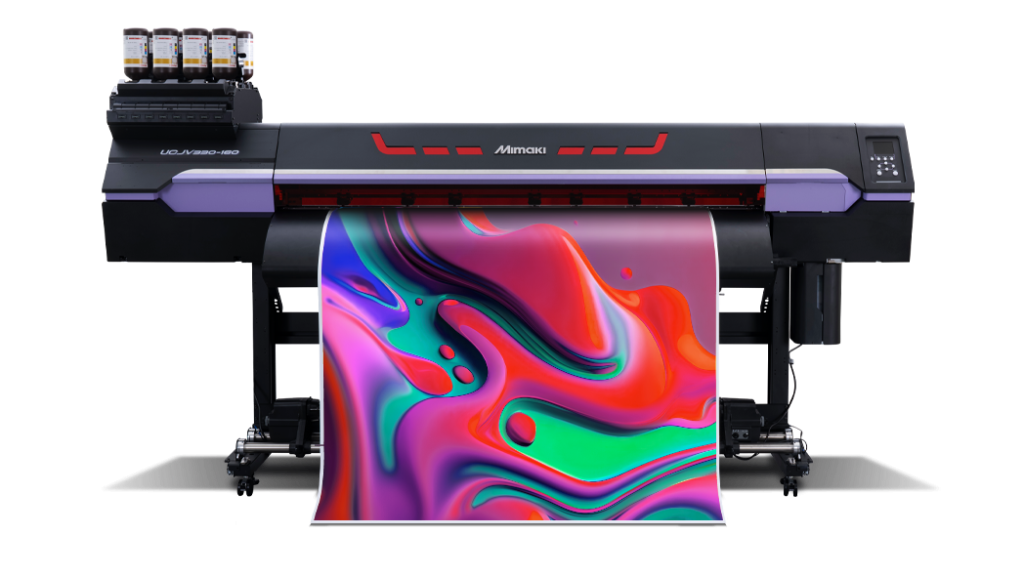
As a partner of the FESPA Foundation 2026, the Portuguese manufacturer of BIOND and Decal films and Iberian distributor of Mimaki equipment developed in-house, at its Torres Novas facilities, the wall decorations for five themed classrooms of the Batau Primary School. The chosen film is BIOND Bio-Print Film P HT BF 90 White Matte (80% bio-based carbon content (C-14), TÜV AUSTRIA OK biobased certified, with EN†13501-1:2018 reaction-to-fire classification and EN†45545-2 fire performance standard), printed on the Mimaki UCJV330 with LUS170 inks certified Greenguard Gold.
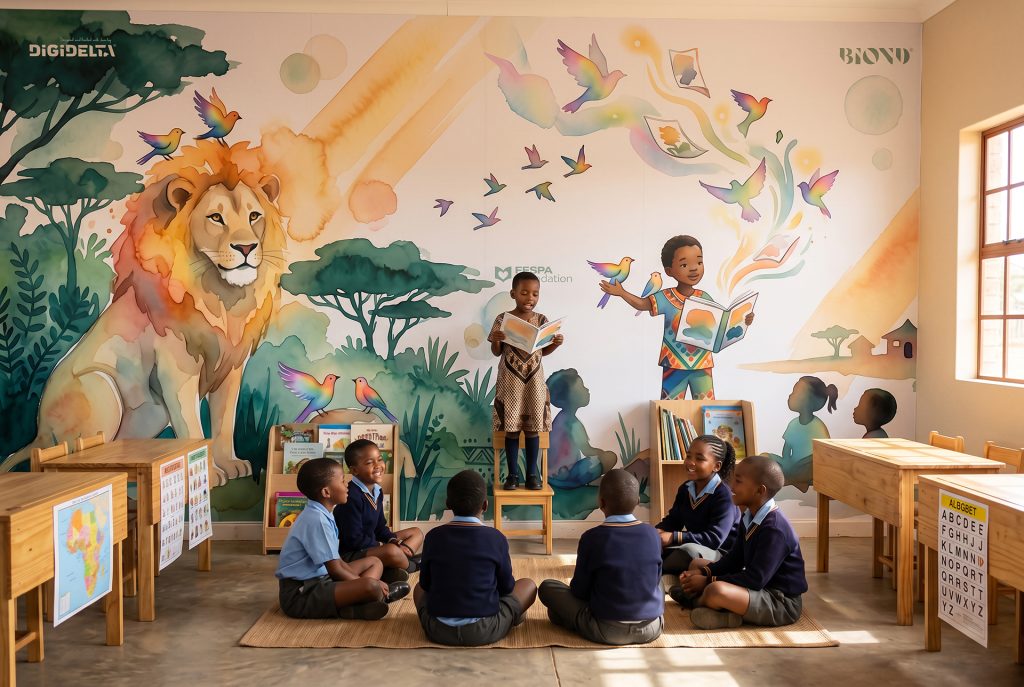
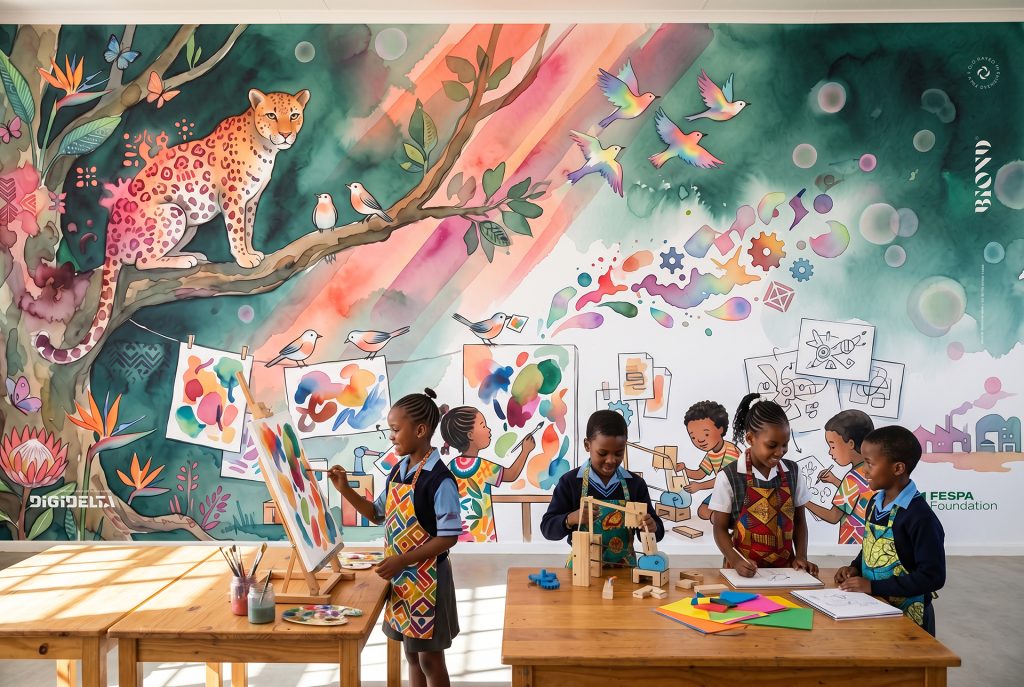
Five animals, five virtues, five futures
Each Batau classroom is dedicated to one Big 5 animal and a specific educational virtue. The Lion Classroom focuses on leadership and confidence; the Elephant Classroom on wisdom and strength; the Leopard Classroom on agility and creativity; the Rhino Classroom on strength and authority; the Buffalo Classroom on teamwork and resilience. Digidelta chose contemporary watercolour as the visual language, with traditional South African patterns (Ndebele, Sotho, Zulu) integrated as visual grammar.
“Rather than treating the Big 5 as themed decoration, we’ve treated them as five mentors,” explains Fábio Costa, Marketing Manager at Digidelta. “Each animal inhabits a classroom dedicated to a virtue. But on each wall, the children aren’t observing; they’re doing. They’re telling stories standing up, tracing first symbols on stones laid out as foundations, inventing small machines, drafting plans for bridges, building structures together. The visual pedagogy is one of agency, not reception.”
Application showcase: a BIOND and Mimaki stack in a real project
The project stands out among the FESPA Foundation 2026 partners for the rare combination it brings together. The conceptual and graphic design came entirely from Digidelta’s in-house creative team. The print substrate is BIOND Bio-Print Film P HT BF 90 White Matte, a film from the BIOND brand that Digidelta manufactures and markets in Iberian and international markets. The equipment used is the Mimaki UCJV330, a UV-LED printer that Digidelta distributes in the Iberian market.
The project therefore functions as an application case study — demonstrating, in a real-world context, what Digidelta’s customers in the printing industry can achieve with this combination of film and equipment in their own studios and production lines. For Armando Mota, however, the significance runs deeper.
“At Digidelta, we have always believed that the purpose of what we manufacture goes beyond its technical performance. We created BIOND because we believe it is possible to make better materials — better for the environment, better for the people who live alongside them. When the FESPA Foundation came to us with this project, it felt like a direct expression of that belief. A bio-based film, in a school, on walls that children will look at every day for years. That is the world we are trying to help build,” says Armando Mota, CEO of Digidelta.
Certifications that matter: healthy air and fire safety
For a project intended for a primary school, Digidelta selected a film and inks with independent certifications covering three critical dimensions in a space where children will spend hours a day for years: origin of the raw material, indoor air quality, and fire safety.
Bio-based content. BIOND Bio-Print Film P HT BF 90 White Matte has a bio-based carbon content of 80% (C-14), independently verified by TÜV AUSTRIA under the OK biobased scheme. The film is manufactured without intentionally added plasticisers. TÜV AUSTRIA OK biobased certification covers both the film and its permanent acrylic adhesive (as per the certified scope), significantly reducing dependence on petrochemicals compared with conventional vinyls.
Indoor air quality. The Mimaki LUS170 inks used in UV-LED printing carry UL Greenguard Gold certification, one of the world’s most demanding standards for low emission of volatile organic compounds (VOCs) in sensitive environments. It was specifically designed for products intended for spaces where children are present, such as schools, nurseries, hospitals, and care homes.
Fire safety. The BIOND Bio-Print Film P HT BF 90 carries an EN†13501-1:2018 reaction-to-fire classification — the European standard applicable to building materials and interior finishes in schools and public spaces. The film additionally meets the requirements of EN†45545-2, a standard developed for railway vehicle materials, where flammability, flame propagation, and smoke release criteria are particularly demanding — providing further fire-performance documentation for safety-conscious environments. In the event of a fire, the film does not contribute to rapid flame propagation, an essential safety property in spaces with children.
“As manufacturers of BIOND, we know exactly what each film contains. In this project, BIOND Bio-Print Film P HT BF 90 White Matte has 80% bio-based carbon content (C-14), TÜV AUSTRIA OK biobased certification on both the film and its permanent acrylic adhesive (as per the certified scope), and EN†13501-1:2018 reaction-to-fire classification together with EN†45545-2 fire performance certification. And as Mimaki distributors in the Iberian Peninsula, we know the LUS170 inks carry Greenguard Gold, the most demanding standard for low emission in environments where children are present. For a project intended for a primary school, the technical choice and the ethical choice coincide: from the air these children will breathe to their safety in any scenario,” says Fábio Costa.
This dimension links the “Roots of Tomorrow” concept to a literal reading: the roots are not only painted in the illustrations; they begin in the raw material of the film itself. And the BIOND slogan, “A Branded Film Today for a Carbon-Free Tomorrow,” moves from a corporate metaphor to a tangible commitment.
Empowering Underserved Communities Through Print
“Roots of Tomorrow” is part of the Empowering Underserved Communities Through Print programme, the FESPA Foundation 2026 theme, and of this year’s central initiative, Big Animal School, a collective effort to rebuild classrooms in South African primary schools. The FESPA Foundation mobilises international printing industry partners to contribute products, materials, and services in the months leading up to the FESPA Global Print Expo. The Barcelona show served as the logistical meeting point for the collection of donations before they are shipped to South Africa.
About the project
- Creative concept: Roots of Tomorrow
- Beneficiary: Batau Primary School, South Africa
- Total: 90 m² of film (five pieces of 6m × 3m each)
- Five classrooms, five Big 5 themes, each wall measuring 6m × 3m
- Film: BIOND Bio-Print Film P HT BF 90 White Matte, manufactured by Digidelta
- 80% bio-based carbon content (C-14), manufactured without intentionally added plasticisers
- 90 micron thickness; permanent acrylic UV bubble-free adhesive
- TÜV AUSTRIA OK biobased certification (film and permanent acrylic adhesive, as per certified scope)
- Fire safety: EN†13501-1:2018 (reaction to fire) and EN†45545-2
- Inks: Mimaki LUS170 UV-LED, with UL Greenguard Gold certification
- Equipment: Mimaki UCJV330, distributed by Digidelta in the Iberian Peninsula
- Production: Digidelta facilities, Torres Novas
- Collection: Digidelta stand, FESPA Global Print Expo, Barcelona, Hall 3 E95, 19–22 May 2026
- International logistics: DSV
- Status: Official partner of the FESPA Foundation 2026
About the certifications
- TÜV AUSTRIA OK biobased (BIOND film and adhesive): an independent certification body that verifies the bio-based carbon content (C-14) of the film and its permanent acrylic adhesive (as per the certified scope), independently validating the declared biological origin of the raw material.
- EN†13501-1:2018 (BIOND film): European standard for reaction-to-fire classification of construction products and building elements — the applicable reference for building materials, interior finishes, and spaces such as schools and public buildings.
- EN†45545-2 (BIOND film): European standard for fire protection in materials used in railway vehicles, considered one of the most demanding for flammability, flame propagation, and smoke release — providing additional robust fire-performance documentation for safety-conscious environments.
- UL Greenguard Gold (Mimaki LUS170 inks): an international standard managed by UL Solutions for low emission of volatile organic compounds (VOCs), with stricter criteria than standard Greenguard. Specifically designed for products intended for environments where children are present (schools, nurseries, hospitals, and care homes) and a reference for certified interior design projects (LEED, BREEAM, WELL).
About the FESPA Foundation
The FESPA Foundation is the philanthropic initiative of FESPA, the European federation of associations for printing and the production of graphics for signage. The Foundation is dedicated to supporting educational and community projects in developing countries, mobilising the international printing industry. The 2026 theme is Empowering Underserved Communities Through Print, and the central initiative for the year is Big Animal School. [www.fespa.com/foundation]